Tuesday, December 28, 2010

On Their Way Out


In an America magazine article “On Their Way Out”, William Byron, S.J picks up on a suggestion that their should be a exit-interview for Catholics leaving the Church behind. The rationale is that Church leaders should be concerned enough to learn why large numbers of “Cradle Catholics” no longer find a spiritual home in the Catholic Church. The irony is that bishops don’t care what people think. They think they are the sole founts on truth, and anyone who doesn’t think so can just “go to Hell.” You can find the article at http://www.americamagazine.org/content/article.cfm?article_id=12642

I found the following reader’s response well written and worth sharing…

I am a 51 year old "Cradle Catholic," one of 5 kids raised in a family that went to church every Sunday with parents who made sure we received our sacraments growing up. I am the only one that still attends Mass regularly. I've been active in my church, in music ministry and teaching CCD. And yet I'm on the cusp of leaving as well, for a variety of reasons.

I find Church teaching on gays and women to be immoral, and do not want my son taught that a loving God considers only unmarried, straight men worthy of invoking His presence at Mass. I find the Church response to the pedophile scandal immoral as well - first moving, rather than removing priests, and later insisting that it is all a media-driven conspiracy to undermine Church authority.

In particular I find the politicization of the Church totally unacceptable. I never thought I would see the American bishops oppose providing health care for all - the most shameful homily I've ever heard a Catholic priest give came in the fall of 2009, when he incited parishioners to contact legislators urging them to vote "no" on health care. In opposing health care reform, the bishops have, in my view, forfeited their moral leadership.

Year after year I've listened to the local bishop and priests tell Catholics that abortion is the most important moral issue facing the country and that it must be the primary factor in deciding how to cast our votes in elections. Yet in the 13 years I attended Mass at the local Cathedral, there was not a single special collection devoted to crisis pregnancy centers - not a diaper or jar of baby food was collected. This supposed "priority" also merited no mention in the yearly pleas for contributions to the bishop's Lenten appeal. Moreover, when our bishop decided to undertake a special fundraising effort, it was not to support crisis pregnancy services, but to build himself a fancy mansion to live in next to the Cathedral. What was that moral priority again? These bishops will throw women out of the church for saving a mother's life (Bishop Olmstead), threaten to withhold communion from pro-choice politicians, and make a show of praying the rosary outside of abortion clinics, they will not lift a finger to help women and babies in need, even urging legislators to deny them access to health care. The hypocrisy is nauseating.

The growing emphasis on the Church as institution, rather than the Church as a teacher of Christ, is also a problem. I find that the Church is more closed and inward looking, teaching a faith that can exist only within the church walls, rather than in the wider world - Christ's message was to "go and make disciples of all nations," not, "build walls between yourself and the world."

I also find the growing emphasis on grandeur and finery among the Church hierarchy - ermine cloaks, crowns, lace vestments - a complete contradiction of the Christ who dressed in the simplicity of a Galilean peasant and who was only dressed in fine robes and a "crown" by his tormentors to mock him.

And, given all of the legitimate issues facing the Church in the world, Rome decides that monkeying with the English translation of the Mass is the most important thing it has to do. Is God any less present in the Mass as it is now? Will this new translation improve the "pipeline" to the Divine? Then why bother, if not simply to assert Roman authority? Latin was used in the early centuries of the Church not because it had any special divine significance, but because it was the spoken language of the believers in Rome (assuming they translated the scriptures correctly from the Greek and Hebrew to begin with). This insistence on strict translation of the Latin suggests that the Mass is little more than a magical incantation (see Harry Potter) - say it "correctly," and poof, Jesus appears; say it "incorrectly," and He withholds His presence.

My family and I do still attend Mass regularly, for now, but only because there is a nearby Jesuit parish that emphasizes the Gospel teachings of Christ, rather than the institutional Church. We will see what the future brings.

Monday, December 20, 2010

A reading from the book of WikiLeaks

Even the Vatican didn't go unscathed in the recent WikiLeak revelations. Blogger Justin Sengstock offered up some well-written and insightful reflections on the subject...

A reading from the book of WikiLeaks
Posted by Justin Sengstock on December 16, 2010

When WikiLeaks made its great data-dump of secret diplomatic cables the other week, revealing just how raw the game of international politics can be behind its closed bathroom door, one particular sovereign state flew under the radar for a while. But the inevitable finally happened. Vatican City got WikiLeaked, too.

John L. Allen, Jr., senior correspondent for the National Catholic Reporter, wrote on December 11: “Secret diplomatic cables revealed this morning as part of the WikiLeaks releases confirm that while the Vatican was appalled by revelations of clerical sexual abuse in Ireland in 2009 and 2010, it was also offended by demands that the papal ambassador participate in a government-sponsored probe, seeing it as an insult to the Vatican’s sovereign immunity under international law.”

Therefore the Vatican ruled that the probe be unctuously deferential: “any requests for information should come through proper diplomatic channels.” And this the Irish people resented, as U.S. diplomat Julieta Valls Noyes noted: “Much of the Irish public views the Vatican protests as pettily procedural and failing to confront the real issue of horrific abuse and cover-up by Church officials.”

So it goes. The Vatican would like to be caring. But the institution has become an end goal in itself, and the aura surrounding it must remain inviolate. It is a great power among the great powers. God and the statecraft of Otto von Bismarck are one.

We often criticize institutionalism on practical grounds, for it often hardens the arteries through which noble ideas and efforts might otherwise pass. But it poses a special risk whenever God is involved, as journalist and former divinity student Chris Hedges suggests in his meditation on the Ten Commandments, Losing Moses on the Freeway.

Hedges argues that when people or institutions “sanctify their own power,” promising us that the mystery of God “can not only be known but also manipulated,” they “lead us away from the worship of God into the corrosive idolatry of self-worship.” Our churches, although ostensibly preaching against idols, can become them. “We believe these idols will protect us, never realizing that idols are always willing to sacrifice their own, to ensure their own preservation.”
So the Irish victims discovered when the Vatican insisted on being “pettily procedural.” So victims of abuse everywhere discovered when the successors of the apostles summoned their lawyers, shut their doors, and lowered their shades. Behind those doors and shades they determined whom to sacrifice, to ensure their own preservation—unlike Jesus, who sacrificed himself for our preservation.

I acknowledge that a total indictment of the Church simply because it is an institution would be naïve and hypocritical. I was initiated into sacramental life by a parish in the Diocese of Joliet, Illinois, and I learned my faith at a high school run by Dominican sisters and the Archdiocese of Chicago. I acquired what radicalism I have, and any theory that backs it up, at a Jesuit university. When I speak as I do about the Church as institution, I inevitably draw on resources that the Church as institution has given me.

Yet, as a believer in synchronicity, I must read John Allen’s December 11 reportage alongside Matthew 21:23-27, the Gospel for the Monday of the Third Week of Advent (December 13 this year). Jesus is teaching the crowd when the chief priests and elders approach him, demanding to know by what authority he works. Jesus insists they answer him first: was John the Baptist’s ministry of divine or human origin?

So the officials begin to debate not the answer, but how whatever answer they give will affect them. If they admit John was sent by God, they will look faithless, but if they say John was not, there might be a riot. Thus the priests and elders say they just don’t know, and Jesus refuses to cite any authority.

Worried about their power and standing within institutional Judaism, the priests and elders were on a different planet from Jesus. He simply had to leave them there and move on, because the Gospel is unintelligible to those who cover their behinds.

I do not advocate throwing away Church structures, but I do advocate poking and pushing those who run them, making them constantly attentive to the possibility that Jesus will leave them there and move on. If WikiLeaks happens to help us poke and push this time, so be it.

Thursday, December 9, 2010

The Secret Lives of Priests


Gene Kennedy recentlyoffered a tribute to the parish priest in a NCR column. Often caught between the conflicting expectations and agendas of the Bishops above and the Church below, parish priests generally show a grace under fire. We would like to share the op-ed piece.


BULLETINS FROM THE HUMAN SIDE: NOVEMBER 18, 2010
THE SECRET LIVES OF PRIESTS BY EUGENE CULLEN KENNEDY

After a decade of revelations about sexual and financial scandals among priests, you would think that there is nothing more to learn about these men who were once revered in the Catholic culture and respected in the culture at large.

While it is undeniable that we know more than we care to about the once hidden lives of some priests, there is a far larger and deeper territory that might as well be the cave next to Bin Laden’s even though it can be entered at any time in the rectory just down the street.

This is the largely unexplored setting of the secret lives of the good priests all around us. Sated with lurid reports about fallen priests few people and no reporters have much interest, much less curiosity, about how faithful priests are living, what they are doing, or how they are feeling.

Goodness never gets into the newspapers. Check the headlines on any day’s paper for the common denominator of a negative word – fraud, investigation, death, fire, failure – and we understand why priests who have kept their promises and stayed at their posts are literally too good for words.

Despite the withering fire of the sex abuse wars, they have not deserted and they don’t complain much either. The reason for that may be that their people have troubles enough of their own and they don’t want to hear any of Father’s. No matter what they have been through, we want our priests to be the same as they have always been, on duty, on time, and on the ball.

I experienced a revelation about their secret lives in a letter from one of the finest priests I know. He wrote that “My soul has turned into a cinder, hard dry and burned out. I’d been running on empty for quite awhile, and I prayed but there was no warmth or juice in the communication from the the Great Generous Comedian…. My job means I (work) with people whose jobs occur in a very intense arena of good vs. evil, life and death….I felt saturated with exposure to human evil, suffering and degradation. In two weeks I was exposed to human sex trafficking of children, a newborn infant thrown in the trash by the mother, an unclaimed body of a policeman who died in a nursing home estranged from his family, and ministering to 5 terminally ill people. I’m not complaining, I’m simply saying that I was running on fumes for a long time. The phone would ring and I’d get irritated instantly, ‘What do they want from me now?’

“I love my job, I love my people, and my work is meaningful to my soul but even though I pray I get worn out ….all the exposure to human degradation, accumulates and goes unresolved….I have not set limits to protect myself from absorbing the pain…we are taught just the opposite: Feel it, roll in it, absorb it…

“It’s an astonishing sea change among priests of my generation that we cannot wait to retire. We’re fed up with apologizing for the Church and trying to explain the profound unending nuttiness (e.g., a seminar on exorcism) that just never stops…. We agree that something of God is rumbling among the people of the Church, the Holy Spirit of God seems to be at work, and it will not stop or be defeated.”

The secret lives of our best priests are not dissimilar but it is hard to get to their stories, if they are printed at all, when the front page still streams with variations on clergy sex abuse from all corners of the world.

This priest’s letter made me think that we really don’t know much about the secret, that is, inner life of Jesus either. From what we read in the gospels, Jesus would understand from his own experience what today’s hardworking priests are enduring.

Jesus preached in an era of institutional religious hypocrisy and was followed by crowds of people who had been struck by His words. Each of them wanted something from him, a cleansing of their leprosy, a cure of their illness, the raising to life of a beloved daughter or friend. Like today’s priests, Jesus emptied himself in order to fill those around Him. He went into the desert, as good priests now do “to rest awhile,” but Jesus returned to the city of man, to respond less to sin than to human suffering. And, reflecting the way many priests now feel stranded, the Lord said that the Son of Man had no place to lay his head.

What did Jesus feel and was it really any different from what our best priests do? What did He mean by that mysterious phrase, “Power went out of me,” if not that, as the suffering touched His garments, He experienced the same drain on His energy that our priests feel every day when wounded people crowd around our priests seeking relief for their sorrows. Power goes out of them as the human price for emptying themselves for the sake of others. We discover the inner life of the Lord in the inner lives of our hardworking priests.

There is no secret about this. It is just, as with Jesus, we do not read between the lines of the scriptures to see that Jesus’s mission was to identify with our suffering more than to condemn our sins. That is the essence of the overlooked lives of our good priests, the ones who never get their names in the paper but who are emptying themselves on our behalf every day.

Tuesday, November 30, 2010

Ring Kissing....

There used to be a time when you were only expected to kiss a bishop’s ring. Now, with renewed emphasis on “obedience” above and beyond all else, one wonders….

Several years back, in implementing Pope John Paul II’s document “Ex Corde”, many US bishops championed the idea of a “mandatum” for theology professors in Catholic Universities. It was seen as a chance for the local bishop to control the teachings, if not the thoughts, of theologians in Catholic institutions. Not all universities toed the line on this one, though apparently it has been accepted by most. This promise of fidelity starts with the Nicene Creed (traditional enough) and then is followed by three statements.

With firm faith I also believe everything contained in the word of God, whether written or handed down in Tradition, which the Church, either by a solemn judgment or by the ordinary and universal Magisterium, sets forth to be believed as divinely revealed.

I also firmly accept and hold each and everything definitively proposed by the Church regarding teaching on faith and morals.

Moreover, I adhere with religious submission of will and intellect to the teachings which either the Roman Pontiff or the College of Bishops enunciate when they exercise their authentic Magisterium, even if they do not intend to proclaim these teachings by a definitive act.

Locally, Cardinal George has been a stickler about obedience from his clergy. Dick Westley, a Chicago area theologian, recently asked:

“Would it surprise you to know that currently in the Archdiocese of Chicago at the installation of new pastors, the new pastor recites the Creed at the proper place at the Mass, and then standing at the altar in front of the whole congregation is required to profess the final three paragraphs - and then sign the “Profession of Faith” right there at the altar?

In the past, such things were done in the privacy of the rectory before the installation.

Would it surprise you to know that in the Joliet Diocese ALL THE PASTORS were recently required to sign the Profession of Faith anew?

To be consistent, soon they will be requiring ALL THE PRIESTS (be they pastors or not) to profess anew. I suppose that eventually, on the Sunday each year when the laity renew their baptismal vow, they will be asked to employ the new ‘Profession of Faith’.”


Now you might ask, why stop there? Perhaps the promises of fealty will soon be required of Sunday school catechists, lectors, choir members, sacristans and altar servers… maybe even parishioners at large to prove they are worthy Catholics? Maybe they should oaths of obedience to their pastors?

To think that at one time we only had to kiss a bishop’s ring…..

Monday, November 22, 2010

WEORC Gala Dinner Re-Cap

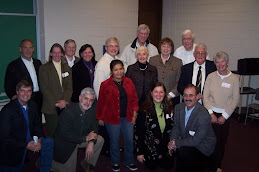
On October 17th, 165 guests, including well over 70 former priests and religious, together with their families, friends, and even a half-dozen canonical priests, celebrated at a gala banquet on the Northside of Chicago. The occasion was the 40th Anniversary of the founding of WEORC. The tone of the evening was festive… like a reunion of old friends, classmates and comrades who had not gotten together for too long a period of time.

WEORC essentially started as an out-placement group for priests and religious men and women. It currently maintains a network of some 2,200 members covering every state in the US and several countries around the world.

WEORC traces its roots to the 1960’s and 70’s when great numbers of men and women were leaving full-time ministry in the Catholic Church for a myriad of reasons – celibacy, authority, lack of change, too much change, etc. Transitioning to a new independence and secular life, meant that they needed basic help in writing resumes, preparing for interviews, and networking with potential employers. About 1970, Monsignor Jack Egan, then president of the Association of Chicago Priests, asked Marty Hegarty (Class of ‘54) to talk to the ACP board about how they could assist priests in transition. An initial workshop was followed by a “Career Day for Priests”. Eighty people paid to attend the conference. There was $225 left after the bills were paid. It became the seed money for the formal organization called WEORC (old English for “work”).

Marty and Jim Wilbur (‘56) became the backbone of the network that has endured to this day. Jim’s particular gift was an aptitude for lists, and he compiled long lists of resigned priests, sisters, and brothers. For those who were interested in participating, directories were published to assist in networking and mutual support. The final printed directory contained the names, addresses, and occupations of over 1,850 individuals. A free periodic newsletter, “The Word From WEORC”, kept members informed and in touch.

As the Hebrews were poised to cross the Jordan River into the land of Israel after 40 years in the wilderness, Moses passed the burden of leadership to Joshua and a new generation. Like Moses, Marty and Jim passed on the burden of leadership in 2001. In this case, Joshua’s name was John Horan (’81), and he pulled together a steering committee of “young” members. Then in the past year the point-person designation for the steering group went to Bob Motycka (’79).

In the program following the fabulous dinner, all four had a chance to speak to the history of WEORC, as well as to its present and future.

Currently not as many priests and religious are leaving ministry, though there is still a steady stream. This isn’t surprising since there aren’t that many young men going into the priesthood anymore. Also, the total number of priests in Chicago (for example) is down a third since 1980, and many of those who remain are now retired (about 27% of Chicago priests). While remaining true to its charter to help those in transition, WEORC continues to offer a forum for discussion and information for the hundreds that had made the transition years ago. Besides the traditional newsletter, WEORC maintains an online blog (http://www.weorc.blogspot.com/) as well as a Facebook page.

WEORC’s focus has grown to include support for brothers and sisters of integrity who remain in active ministry, and who face the burdens of the ongoing pedophilia scandal, the growing shortage of priests, the dismantling of the reforms initiated by Vatican II, and the culture wars within the institutional Church. We have sent some pastoral letters to all the clergy in the Chicago Archdiocese. While some resented our input, others have been truly appreciative. One wrote back – “Continue speaking the truth. We hear very little truth from the Diocese these days.”

WEORC continues our support for women religious who have been badly treated by the hierarchy, and to support them when they run into conflict with the powers that be. We support a more inclusive priesthood.

WEORC will continue to celebrate the many ways in which resigned priests and religious men and women have brought the spirit of the Gospels into their parishes, their workplaces, and into the quest for social justice both within the Church, and in the wider society.

Finally, WEORC continues to be deeply concerned about this Catholic Church, which we love despite its flaws and frustrations. Recently, a Vatican official was dismissive to the representative of an Irish group, saying “you are a nobody leading a bunch of nobodies.” We may also be “nobodies”, but we can connect with other groups of “nobodies” to create a climate in which the Holy Spirit might initiate a surprise for the Church. It happened when Nelson Mandela emerged from prison to end apartheid in South Africa. It happened in the old Soviet Union when Michail Gorbachev emerged to bring down the Iron Curtain. And it happened when John XXIII was elected Pope and threw open the windows of a moribund church. We hope that WEORC can be a small, but significant part of that effort to heal our dysfunctional church.

The evening concluded with awards of appreciation for Marty and Jim, and a rousing chorus of “Ad multos annos”.

You can check WEORC out on-line, or drop us an email at weorc@comcast.net .

Friday, November 19, 2010

Evangelization, or Catholic Jingoism???


Jingoism is defined in the Oxford English Dictionary as "extreme patriotism in the form of aggressive foreign policy". In practice, it refers to the advocation of the use of threats or actual force against others in order to safeguard what they perceive as their own country’s interests, and colloquially to excessive bias in judging one's own country as superior to others – an extreme type of nationalism. It is captured in phrases like “My country, right or wrong” and “Might makes right.”

Replace the political references with “Catholic”, and you virtually have the definition of the “new” Evangelization in the JPII worldview, or Catholic Jingoism. Fr. Pat Brennan recently wrote a reflection on a similar point….

This past spring, one of the books I used in teaching at the Institute of Pastoral Studies, was The Future Church: How Ten Trends Are Revolutionizing the Catholic Church by John Allen. John Allen mentions influences in the 21st century that are going to have an impact on the future of the Catholic Church… One trend that I was eager to read about was a chapter entitled Evangelical Catholicism.

Based on my background in evangelization work, I was enthused that Allen was seeing in the church a renewed interest in evangelization as called for by Paul VI in 1975. As I understand it, evangelization has to do with calling people to a personal and communal relationship with Jesus Christ, conversion, and a growing experience of life in the Reign of God.

I was disappointed when I read Allen's description of the church's renewed interest in evangelization. The new Catholic evangelization is one that is promoting the institution of the church, Catholic culture, Catholic norms, and Catholic expectations. It is more a restoration movement than it is refounding the church according to the mission and vision of Jesus. This new Catholic evangelization sets black and white standards of what it means to be Catholic. If you do not meet the standards, you are not needed or wanted. Some Catholic leaders have said perhaps we are in a purification process and that what we need are fewer Catholics who abide more rigorously to Catholic norms and expectations.

Tuesday, November 16, 2010

Purging the Priesthood II

The Vatican’s “clarification” this summer that pedophilia and women desirous of becoming priests were “delicta graviora” amused some, angered others, was ignored by many more. However, it drew a response from the Pastor of Ascension Parish in Oak Park (near Chicago) and over 600 parishioners that signed a letter about the Church’s apparent callousness in dealing with women in general, and then making the incredulous comparison between the "sin" of women priests and pedophilia. The petition took aim at that notion, saying "we take great offense that good faith struggles for gender equality could be misunderstood as a sacrilege and placed on a par with the sexual abuse of children."

The Pastor, Rev. Larry McNally, brought the petition personally to Cardinal George while the Cardinal was preparing for another trip to Rome. The Cardinal graciously invited McNally into the Cardinal residence for lunch and said he would bring the petition to Rome. George only took McNally to task for his complaints about Cardinal Law getting off easy in the Abuse Scandal - being “punished” with a plum Vatican assignment.

Of course, a month or so after the dust-up, the other shoe has now fallen. Cardinal George, seeking to distance himself from the issue personally, delegated Auxiliary Bishop John Manz to crackdown on Father McNally. McNally was ordered to apologize to his congregation for causing “confusion” about Church doctrine and had to read sections of the Catholic Catechism to his congregation from the pulpit. The alternative was to resign.

More details are available at: http://www.chicagocatholicnews.com/2010/11/suburban-priest-muzzled-over-remarks-on.html and http://www.oakpark.com/News/Articles/11-02-2010/Ascension_walks_afoul_of_Catholic_establishment